
A nursing professor at Purdue University placed fish tanks in the Alzheimer's units of three Indiana nursing homes, where getting people to sit down and finish a meal is a daily struggle. Within weeks, residents were eating up to 21% more food.
That study became one of the most cited pieces of research on aquarium therapy for seniors. It also raised a question that researchers have been exploring ever since: what is it about watching fish that reaches people when so little else does?
In This Article
What Happened in the Purdue Study
Dr. Nancy Edwards tracked 60 residents across three facilities. Before introducing the aquariums, her team spent four weeks recording each resident's eating habits and behavior, weighing every plate before and after each meal.
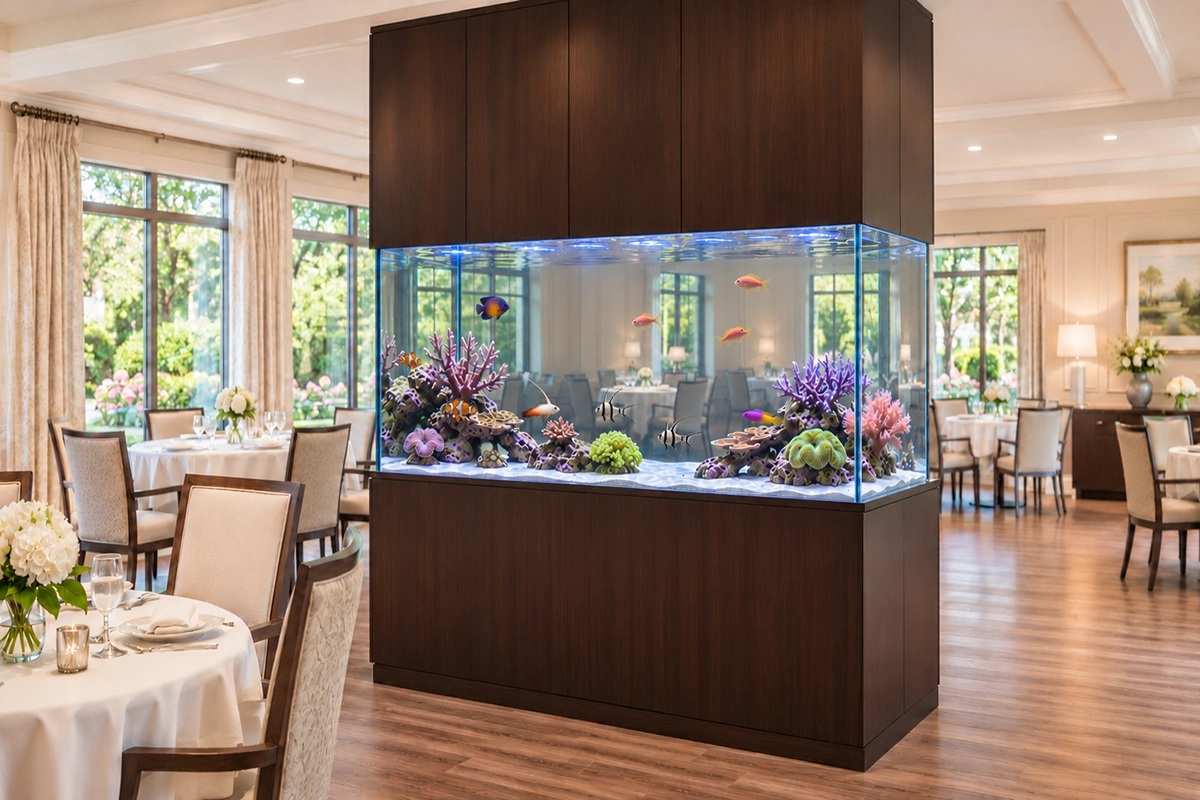
An aquarium placed where residents already gather, at mealtime
When the tanks arrived, the changes were measurable:
- Residents ate more. Average food intake rose 17.2%, and up to 21% in the published follow-up.
- They gained healthy weight. Residents gained an average of 1.65 pounds over 16 weeks and needed fewer nutritional supplements.
- They stayed engaged. The tanks often held residents' attention for up to 30 minutes, a long time for many people with Alzheimer's.
- Disruptive behavior dropped. Wandering, pacing, yelling and physical aggression all decreased.
A later Purdue study with 70 residents in North Carolina and Florida found similar results. Residents ate about 6.9 more ounces of food per day and gained an average of 2.2 pounds over ten weeks.
The tanks themselves were built for the setting: tip-proof, with locked tops, shatter-resistant panels and a background designed so residents with cataracts could still see the fish. More than 25 years later, Dr. Edwards still describes aquariums as a way to change a care environment so residents don't necessarily need to be medicated.
Why a Fish Tank Holds Attention
People with dementia often lose interest quickly and drift from task to task. Fish offer something unusual: constant, gentle movement that never repeats exactly but never startles. Edwards' team described the effect as a calm, settled focus that kept residents at the table long enough to eat.
Fish also ask nothing of the viewer. There is no petting, no noise and no risk of a scratch or a fall. Someone with limited mobility, limited speech or advanced memory loss can still enjoy them fully.
What Other Studies Have Found
Purdue's work is the best known, but it is far from the only research on fish and wellbeing.
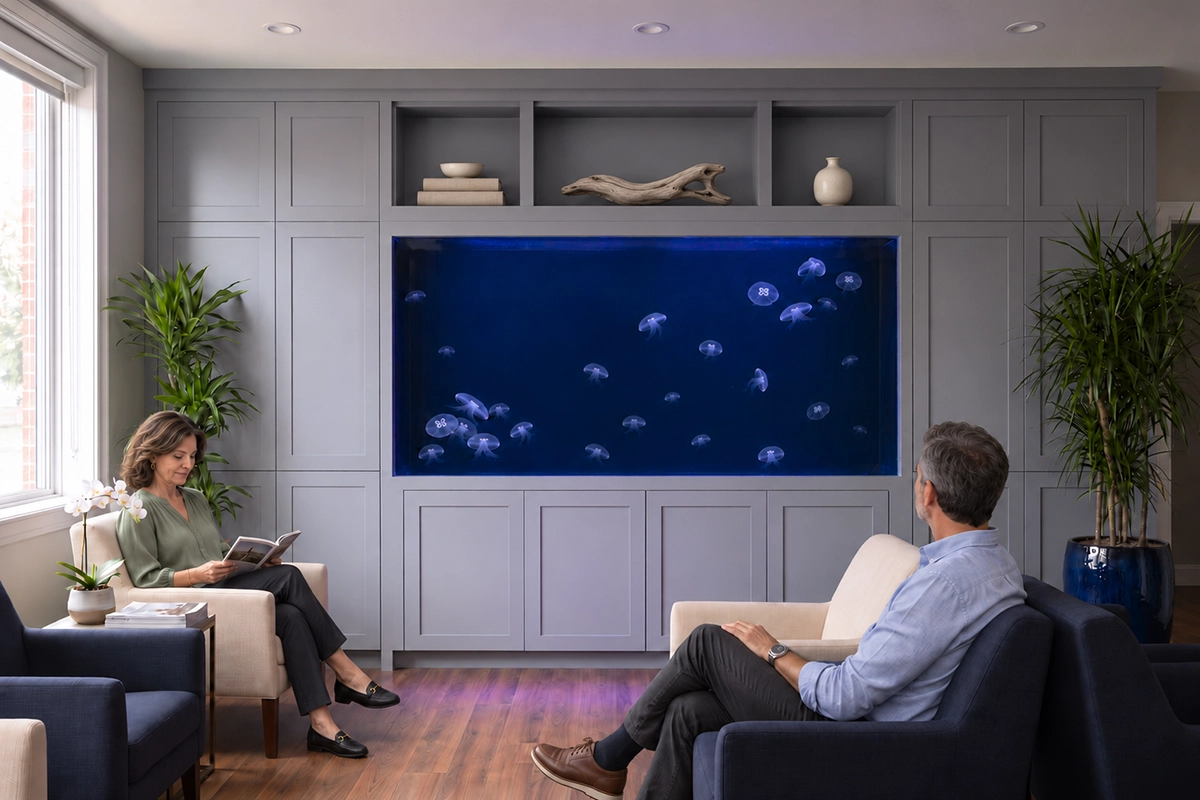
A built-in jellyfish aquarium brings calm to a waiting room
Seniors living at home. Researcher C.C. Riddick gave aquariums to older adults living independently. Compared with two control groups, the aquarium owners showed improvements in diastolic blood pressure, relaxation and overall satisfaction with their leisure time.
Fish as conversation starters. A follow-up study observed that residents often adopted one or two favorite fish and talked about them with each other.
Companionship and community. A 2021 University of Tokyo study gave older adults a small aquarium to care for at home. Those living alone treated their fish as companions. Neighbors began visiting each other to see the fish, and in two cases residents cared for a friend's fish during a hospital stay.
Before surgery. In a study of 42 oral surgery patients, watching an aquarium beforehand was as relaxing as hypnosis, and far more relaxing than looking at a poster.
Pain. A pediatric orthopedics team at Armand Trousseau Hospital in Paris found that just five minutes of aquarium viewing raised people's pain tolerance. The hospital later built an aquarium into its patient care protocol.
More fish, more benefit. When the UK's National Marine Aquarium restocked a major exhibit, researchers measured visitors' responses at each stage. Blood pressure and heart rate dropped, and fuller tanks held attention longer and lifted mood more.
Waiting rooms. A 2024 review of medical waiting room studies found that patients who watched an aquarium for 20 minutes had significantly lower heart rates.
What the Research Does Not Claim
An aquarium is not a medical treatment, and the science is still developing. A 2019 systematic review found promising early evidence for benefits to mood, pain, nutrition and body weight, but not for loneliness. The authors also noted that most studies were small.
Some trials found little physical change. A 2021 study in a Swiss geriatric dental clinic measured no difference in blood pressure or anxiety, although patients rated the waiting room with fish significantly higher than the others. Another 2019 study found people felt calmer and happier watching live fish, even when their heart rate stayed the same.
The most consistent findings are about how people feel: calmer, more engaged, more social and, in memory care, more willing to eat. For a care community, those are meaningful outcomes.
A Therapeutic Aquarium Only Works If It Thrives
A cloudy tank or a struggling fish does the opposite of what the research describes. In a care setting, the aquarium also has to be safe, quiet and simple for staff. That means planning for:
- Placement: Dining rooms and common areas where residents already gather, at a viewing height that works from a wheelchair.
- Visibility: Bright, colorful species and a high-contrast background for residents with vision changes.
- Safety: Secured cabinetry, locked lids and equipment that residents cannot reach.
- Quiet operation: Pumps and filtration that don't add noise to an already busy environment.
- Professional care: Scheduled professional maintenance so staff never handle water changes, feeding or troubleshooting.
One hospital emergency department installed a 600-gallon freshwater aquarium for patients and contracted an outside company to maintain it. That model, where the facility enjoys the aquarium and a specialist keeps it healthy, is the one that works.
Bringing Aquarium Therapy to Your Community
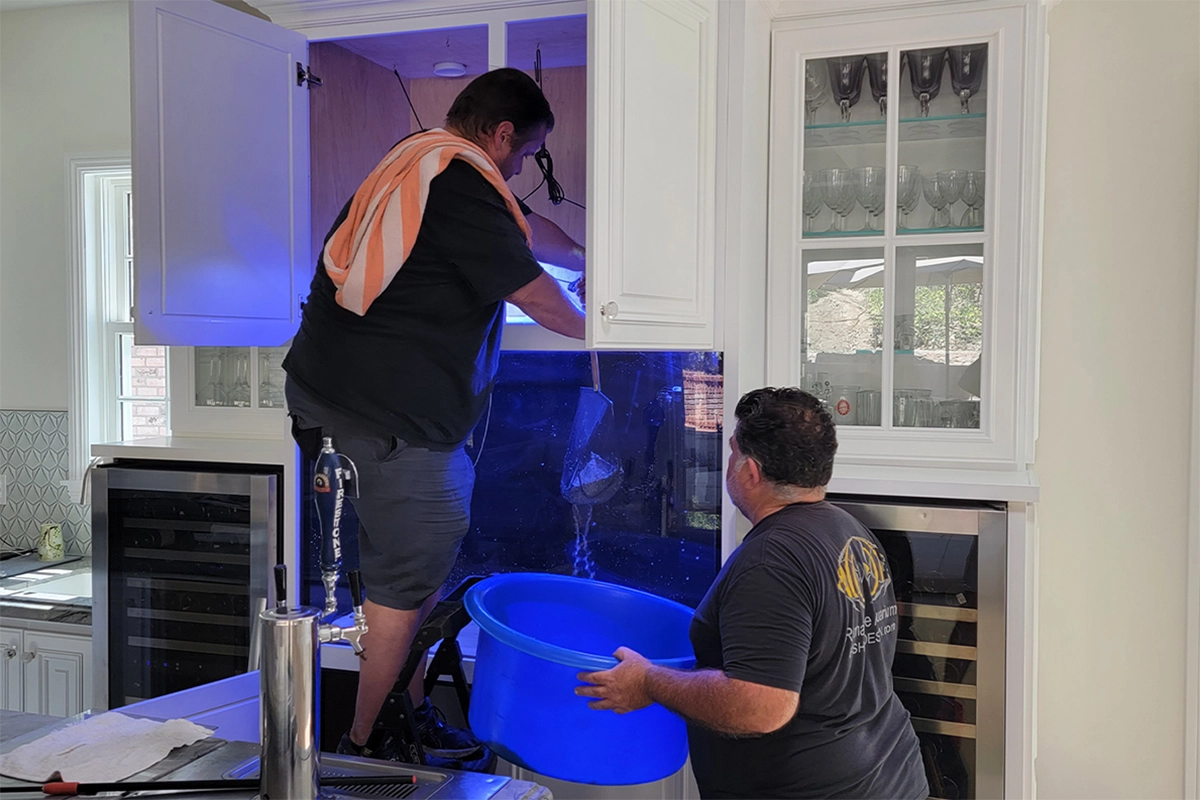
Fish By Design technicians on a scheduled service visit
Fish By Design has designed, installed and maintained custom aquariums across Los Angeles and Orange County for more than 30 years. For senior living communities, memory care residences and medical offices, we handle everything: the design, the installation and the ongoing care that keeps the aquarium healthy and beautiful.
No construction required. Not every community can open a wall for a built-in aquarium, and it doesn't need to. We can deliver a complete, freestanding aquarium system with the tank, cabinetry, filtration, lighting and fish, fully set up and ready to enjoy. Installation happens without renovation, and without disrupting residents' daily routines.
Maintenance that keeps costs predictable. One service plan covers everything the aquarium needs:
- Scheduled water changes and water quality testing
- Feeding programs and livestock health checks
- Equipment inspection, cleaning and replacement
- Glass cleaning so the aquarium always looks its best
Your staff stay focused on residents, not the tank. Consistent professional care also prevents the expensive problems that come with neglect, like equipment failure and livestock loss, so your monthly cost stays steady and predictable.
Frequently Asked Questions
Bring Aquarium Therapy to Your Residents
Fish By Design designs, installs and maintains aquariums for senior living communities, memory care residences and medical offices throughout Southern California.
Schedule a consultation to explore what an aquarium could do for your community:
Contact Us: Request a Consultation
View Our Work: See Completed Installations
Service Areas: Los Angeles and Orange County
About Fish By Design
For over thirty years, Fish By Design has designed, built and maintained custom aquariums for homes, businesses and care communities throughout Los Angeles and Orange County. Our in-house fabrication and comprehensive maintenance services mean every aquarium stays healthy, beautiful and worry-free for the people who enjoy it.